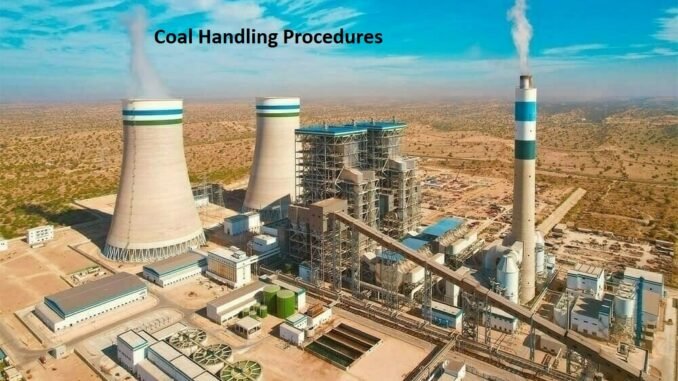
Coal Handling Operation: Step by Step Procedures
Coal handling system
From the coal unloading point to the coal field storage, and from the coal field to the coal bunker
between the coal transport equipment and control equipment, generally coal unloading, Generally by
Unloading coal Supply coal Storage of coal and Coal blending, a total of four parts.
Coal dust Operation :
In coal yard, coal unloading wharf and coal handling system At the time of operation due to dry
powder or friction with the equipment raised dust.
Iron separator Operation :
The equipment through the electromagnetic force eliminates ferromagnetic impurity in the raw coal
Guarantee Safe and stable operation and delivery to the ring-hammer coal crusher roller screen, also Can
effectively prevent accident and iron scraping belt conveyor hence enhance the raw coal quality this
purpose. The power station is achieved by two types Iron separator: disc-type iron separator and belt-shape
iron separator.
Dust collector Operation :
The pulse type cloth sack dust remover is one kind of dry type filter. It is suitable for capturing small,
dry, non-fibrous dust. The filter bag is made of textile filter cloth and the dusty gas is filtered by the filtering
effect of the fiber fabric. When the dust-laden gas enters the bag filter, the particles that are larger than the
dust they sediment down and fall into the ash bucket, gas containing smaller dust is filtered through the
filter, hence the gas gets purified.
Step-by-Step Procedures for Coal Handling Operations
Coal Receiving
Inspect incoming coal for quality and quantity.
Verify proper unloading from transportation (e.g., trucks, railcars, ships).
Ensure all safety protocols are followed during unloading.
Coal Storage :
Transfer coal to designated stockpiles or storage yards.
Use bulldozers or stackers to manage coal piles, minimizing dust and ensuring stability.
Monitor moisture levels and temperature to prevent spontaneous combustion.
Coal Blending (if required)
Mix coal from different sources to achieve the desired quality.
Ensure blending operations meet specifications for plant requirements.
Coal Crushing and Screening :
Transport coal to crushers for size reduction.
Screen coal to remove oversized materials or impurities.
Collect processed coal for further handling or storage.
Belt Conveying System :
Use conveyor belts to transport coal from storage to processing or feeding points.
Regularly inspect and maintain conveyor systems to prevent malfunctions.
Ensure proper dust suppression measures are in place.
Coal Feeding :
Deliver coal to the plant’s furnace or boiler as per operational requirements.
Use feeders (e.g., belt feeders, rotary feeders) to ensure a consistent coal flow.
Ash and Waste Handling :
Safely remove ash and other byproducts generated during combustion.
Transport waste materials to designated disposal or recycling sites.
Safety Measures :
Conduct regular safety checks on equipment and systems.
Equip workers with proper personal protective equipment (PPE).
Install fire suppression systems in critical areas.
Environmental Controls :
Implement dust control systems to reduce air pollution.
Monitor and treat wastewater or runoff from coal handling areas.
Comply with local environmental regulations to minimize the impact.
Routine Maintenance and Inspections :
Conduct regular inspections of handling equipment, such as conveyors, crushers, and storage systems.
Address wear and tear or potential breakdowns proactively.
Keep detailed maintenance records for all equipment.

Be the first to comment